Blog
The Material Behind the Product: Why Cork Is More Than Just Sustainable

When people talk about cork, sustainability is often the first thing that comes to mind.
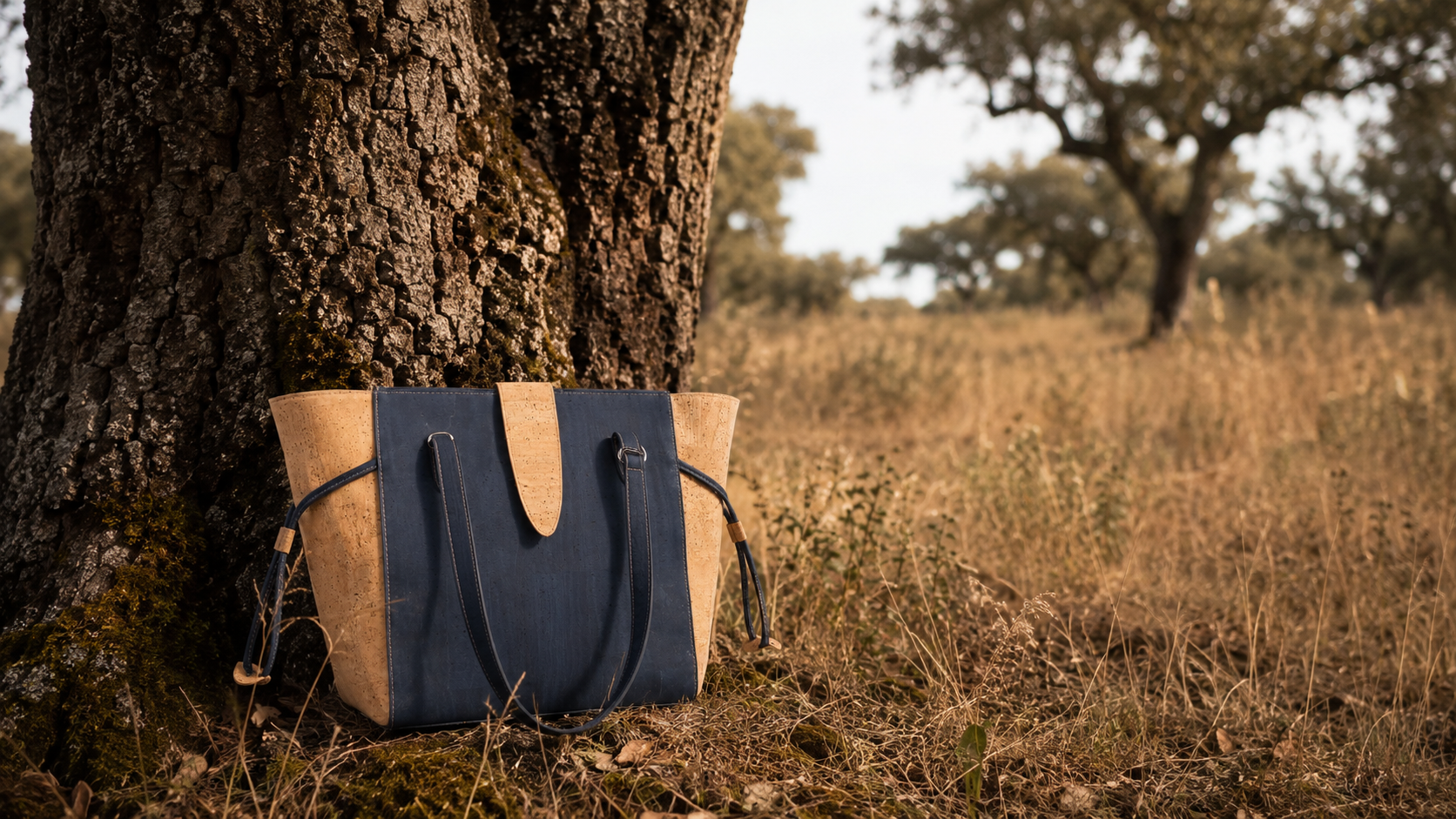
And it makes sense. Cork is a natural material harvested from the bark of the cork oak without cutting down the tree. It is renewable, lightweight and has a fascinating relationship with the landscape where it grows.
But sustainability is only part of the story.
For designers, retailers and consumers, what makes cork particularly interesting is not simply where it comes from. It is what the material itself can do.
Its lightness, natural texture, flexibility, resilience and distinctive appearance give cork a combination of qualities that is difficult to find in many conventional materials.
That is why cork has moved beyond its traditional uses and into contemporary fashion, accessories, homeware, design and lifestyle products.
What Makes Cork Material Different?
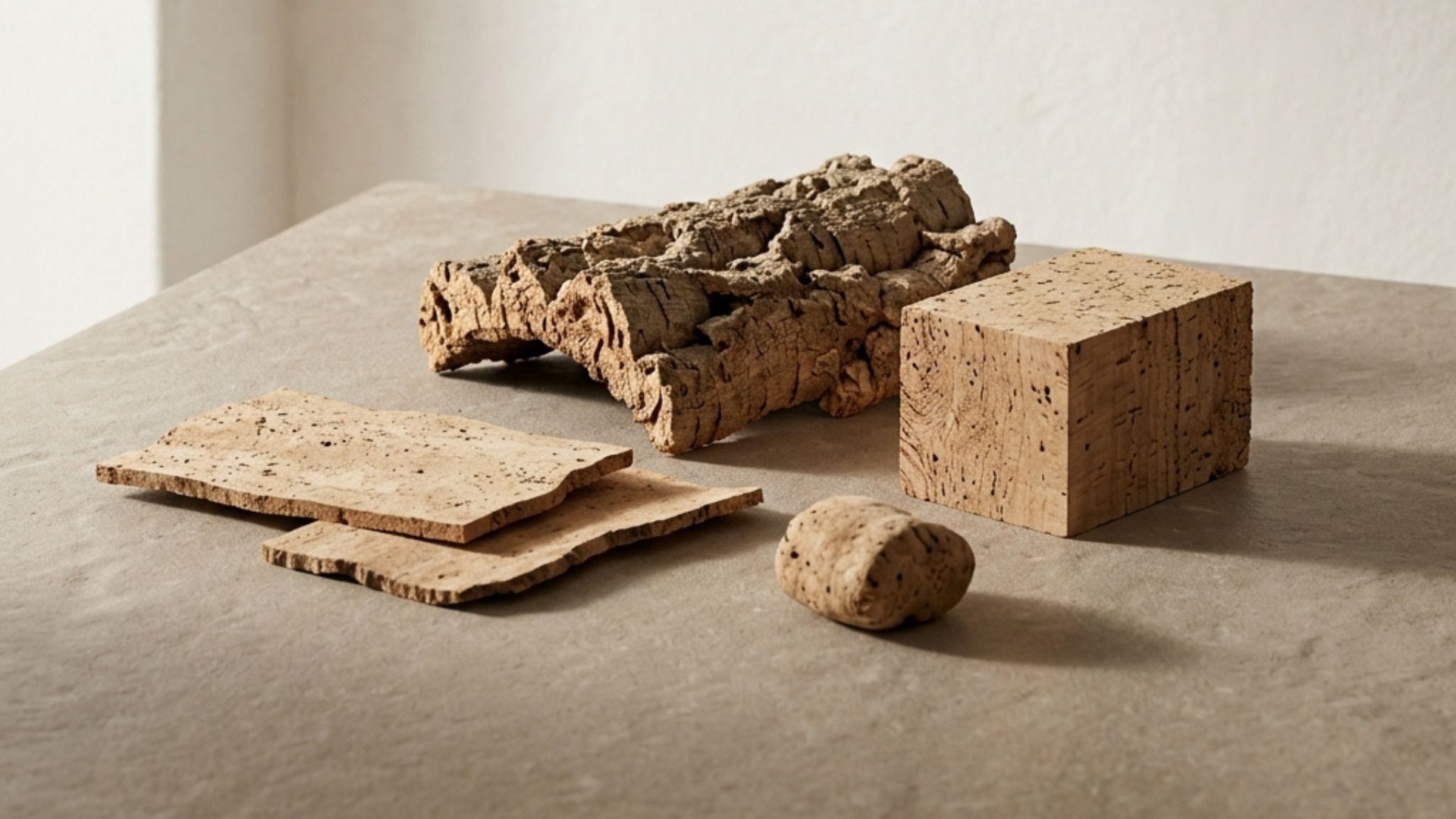
Cork comes from the outer bark of the cork oak tree, Quercus suber. Its structure is made up of millions of tiny cells containing air, which helps explain many of its characteristic properties.
The result is a material that is remarkably light while still being resilient and versatile.
But its appeal is not only technical.
Cork has a visual and tactile identity of its own. Its natural grain, subtle variations and warm tones make every piece feel connected to the material it came from.
For modern design, that combination of function, texture and natural character is particularly valuable.
1. Cork Is Exceptionally Lightweight
One of the most recognisable properties of cork is its low weight.
This makes cork particularly interesting for products that are designed to be carried or used regularly.
From fashion accessories to everyday objects, lightweight materials can make a noticeable difference to the experience of using a product.
For retailers, this also creates an interesting opportunity. A product can have a distinctive natural appearance without feeling heavy or cumbersome.
2. Cork Has a Distinctive Natural Texture
Some materials need to be processed extensively before they acquire their final appearance.
Cork is different.
Its natural grain and cellular structure give it an immediately recognisable texture. Depending on how it is processed and finished, cork can appear smooth, structured, soft or more visibly organic.
This creates a strong visual element for designers.
The material itself becomes part of the design rather than simply serving as a background for it.
For products displayed in a retail environment, this can be particularly important. Texture catches the eye and encourages people to look more closely, pick up an object and explore it.
3. Cork Is Flexible and Resilient
Cork has a natural degree of flexibility and resilience that contributes to its versatility.
It can adapt to different applications while maintaining its characteristic structure and appearance.
This is one reason cork has found its way into products designed for everyday use.
A material does not have to be rigid to be durable. Cork demonstrates how flexibility can be part of a product’s performance.
For designers, this opens up possibilities that go beyond purely decorative applications.
4. Cork Is Naturally Water Resistant
Another important property of cork is its natural resistance to water.
The cork cell structure contains suberin, a waxy substance that contributes to its water-resistant characteristics.
This does not mean that every cork product is completely waterproof. The final performance depends on the type of cork, processing and construction of the product.
However, cork’s natural relationship with moisture makes it an interesting material for a wide range of everyday applications.
It is another example of how the material’s natural properties can contribute to functionality.
5. No Two Pieces of Cork Look Exactly the Same
Natural variation is one of cork’s most appealing characteristics.
Grain, colour and texture can vary depending on the source of the cork and how the material is processed.
In an industry increasingly interested in uniformity and mass production, this natural variation can be a strength.
It gives products a sense of individuality.
For design-led retailers, this is particularly relevant because customers are often looking for products that feel distinctive rather than completely anonymous.
The small variations in a natural material can make an object feel more personal.
6. Cork Creates a Strong Tactile Experience
There is also something less technical about cork.
It feels different.
Its texture creates a tactile experience that synthetic materials often struggle to reproduce. When customers pick up a cork product, they are not simply seeing its appearance. They are experiencing the material.
This matters in physical retail.
A product’s story may attract someone to it, but the experience of touching and handling the product can influence whether they decide to take it home.
For retailers, materials therefore have an important role in creating memorable shopping experiences.
7. Cork Works Across Different Design Categories
One of the reasons cork has gained attention in contemporary design is its versatility.
The same natural material can be interpreted in very different ways depending on the product, finish and design approach.
Cork can be used in:
- Fashion and accessories
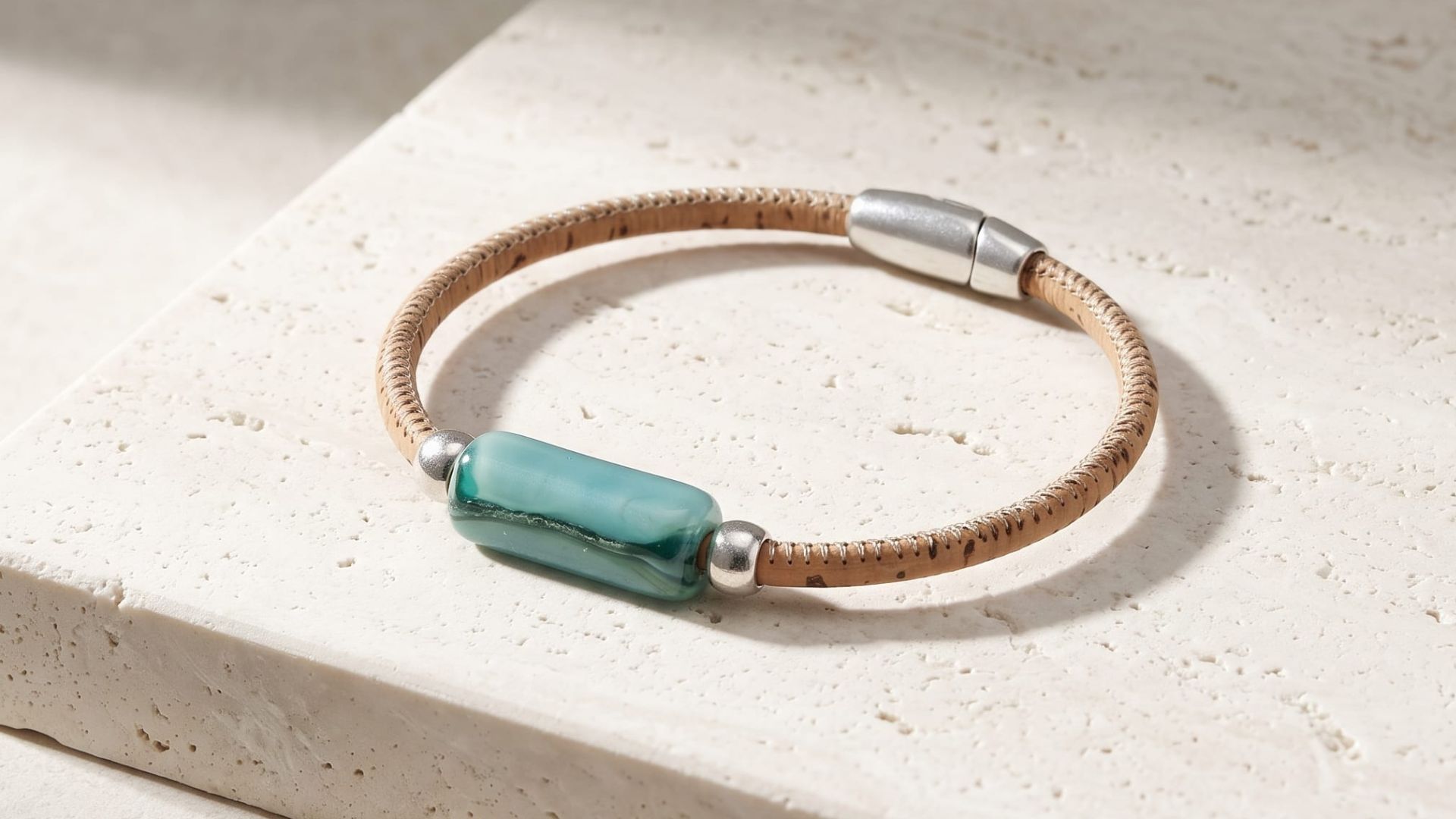
- Jewellery
- Home and lifestyle products
- Gifts
- Corporate products
- Interior and design applications
This versatility allows cork to move between different retail environments.
It can feel natural and understated in one context, contemporary and sophisticated in another.
The material does not dictate one particular aesthetic. Good design determines how its qualities are expressed.
Cork Fabric: When a Natural Material Meets Contemporary Design
One of the most interesting developments in cork design has been the transformation of cork into a flexible material suitable for contemporary products.
Often referred to as cork fabric, this material combines the characteristic appearance of cork with a format that can be worked into different designs.
This has helped change the perception of cork.
It is no longer associated only with traditional applications, wine stoppers or rustic objects.
Instead, cork can become part of a modern design language.
For brands and retailers, this evolution is important because it demonstrates that natural materials do not have to look traditional.
They can be refined, contemporary and design-led.
Why Material Quality Matters to Retailers
For a retailer, choosing a product is about more than choosing an attractive object.
The material behind the product can influence its appearance, functionality, durability and the story that can be communicated to the customer.
Cork offers several layers of value.
There is the origin of the material.
There is the craftsmanship involved in transforming it.
There are its physical properties.
And there is the visual identity that makes the finished product immediately recognisable.
This gives retailers more than a sustainability message to communicate.
It gives them a product story with substance.
Sustainability Is Only the Beginning
Sustainability has become an important consideration when choosing materials.
But a product cannot rely on sustainability alone.
Customers still expect good design.
They want functionality. They want quality. They want something they enjoy using.
This is where cork becomes particularly interesting.
Its environmental credentials may be what initially attracts attention, but its material qualities are what make it commercially relevant.
A natural material that is lightweight, tactile, versatile and visually distinctive has the potential to create products that customers want for reasons beyond sustainability.
And that is ultimately what makes a material valuable.
Portuguese Cork and Contemporary Design
Portugal has a long-standing relationship with the cork oak and cork production.
But the story of Portuguese cork is not only about tradition.
Today, cork is being interpreted through contemporary design, creating products that connect a natural Portuguese material with modern lifestyles.
At Artelusa, this approach is central to the way cork is transformed into finished products.
The objective is not simply to use cork because it is a sustainable material.
It is to explore what cork can become.
Its texture, lightness, versatility and natural character become part of the design, creating products that can feel contemporary while remaining connected to their material origin.
For retailers, this creates an opportunity to offer something that combines design, material identity and a genuine Portuguese story.
The Future of Cork Is About More Than Sustainability
The future of natural materials will not depend only on their environmental credentials.
It will also depend on their ability to meet the expectations of modern design.
Cork has an interesting position in this conversation because it brings several qualities together.
It is natural, distinctive, lightweight, flexible and tactile.
It has a strong visual identity, but it can also be interpreted in understated and contemporary ways.
Most importantly, it demonstrates that choosing a more responsible material does not have to mean compromising on design.
Perhaps that is the most interesting thing about cork.
Sustainability may be what first attracts us to the material. Its qualities are what make us want to keep it.
Frequently Asked Questions About Cork Material
What is cork material?
Cork is a natural material obtained from the bark of the cork oak tree. The bark can be harvested without cutting down the tree, allowing the cork oak to continue growing and producing new bark.
What are the main properties of cork?
Cork is known for being lightweight, flexible, resilient, naturally water resistant and distinctive in texture. These properties make it suitable for a wide range of design and everyday applications.
Is cork a sustainable material?
Cork is considered a renewable natural material because it is harvested from the bark of cork oak trees without removing the tree itself. Cork production is also closely connected to the preservation of cork oak landscapes and their biodiversity.
What is cork fabric?
Cork fabric is a flexible material made using cork that can be incorporated into contemporary product designs. It allows designers to use the visual and tactile qualities of cork in applications where a more flexible material is required.
Why is Portuguese cork important?
Portugal has a long tradition and expertise in cork production and transformation. Portuguese cork is closely connected to the country’s cork oak landscapes and has become increasingly relevant to contemporary design and sustainable products.
Why is cork interesting for product design?
Cork combines distinctive natural aesthetics with practical properties such as lightness, flexibility, resilience and water resistance. This makes it a versatile material for creating contemporary products.
Discover the Material Behind Artelusa
At Artelusa, cork is more than a material.
It is the starting point for creating contemporary products that combine Portuguese heritage, thoughtful design and the natural qualities of cork.
For retailers, concept stores, gift shops and other businesses looking for distinctive products with a genuine story, cork offers an opportunity to bring something different to the assortment.
Because sometimes, the most interesting part of a product is not what it looks like.
It is what it is made of.