Blog
Cork vs Leather: 7 Reasons Why Portuguese Cork Is the Smarter Choice


When comparing cork vs leather, many people assume the choice comes down to style. In reality, there’s much more to consider. Sustainability, durability, comfort and maintenance all play an important role in choosing an accessory you’ll use for years.
Leather has been a trusted material for centuries, valued for its strength and timeless appeal. However, Portuguese cork has emerged as a modern alternative that combines elegant design with a significantly lower environmental impact.
So, how do these two natural materials compare?
Here’s why more people are choosing cork for bags, wallets and everyday accessories.
Key Takeaways
- Portuguese cork is a renewable natural material.
- Cork is lightweight, durable and naturally water resistant.
- Leather remains a premium material but requires more maintenance.
- Cork supports biodiversity and sustainable forestry in Portugal.
- Both materials are durable, but they suit different lifestyles.
Cork vs Leather: 1. Cork Is Renewable
One of the biggest differences between cork and leather starts at the source.
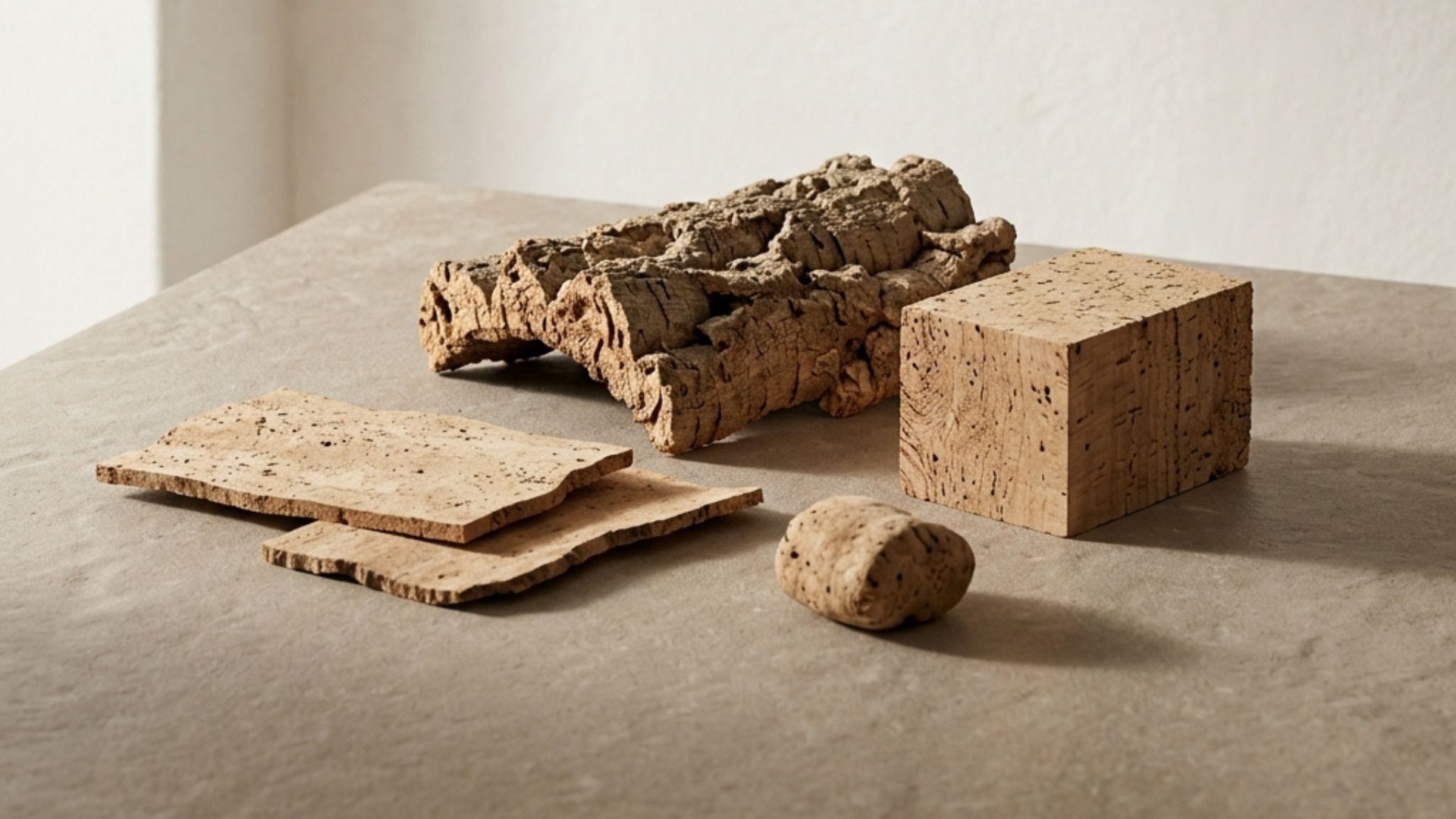
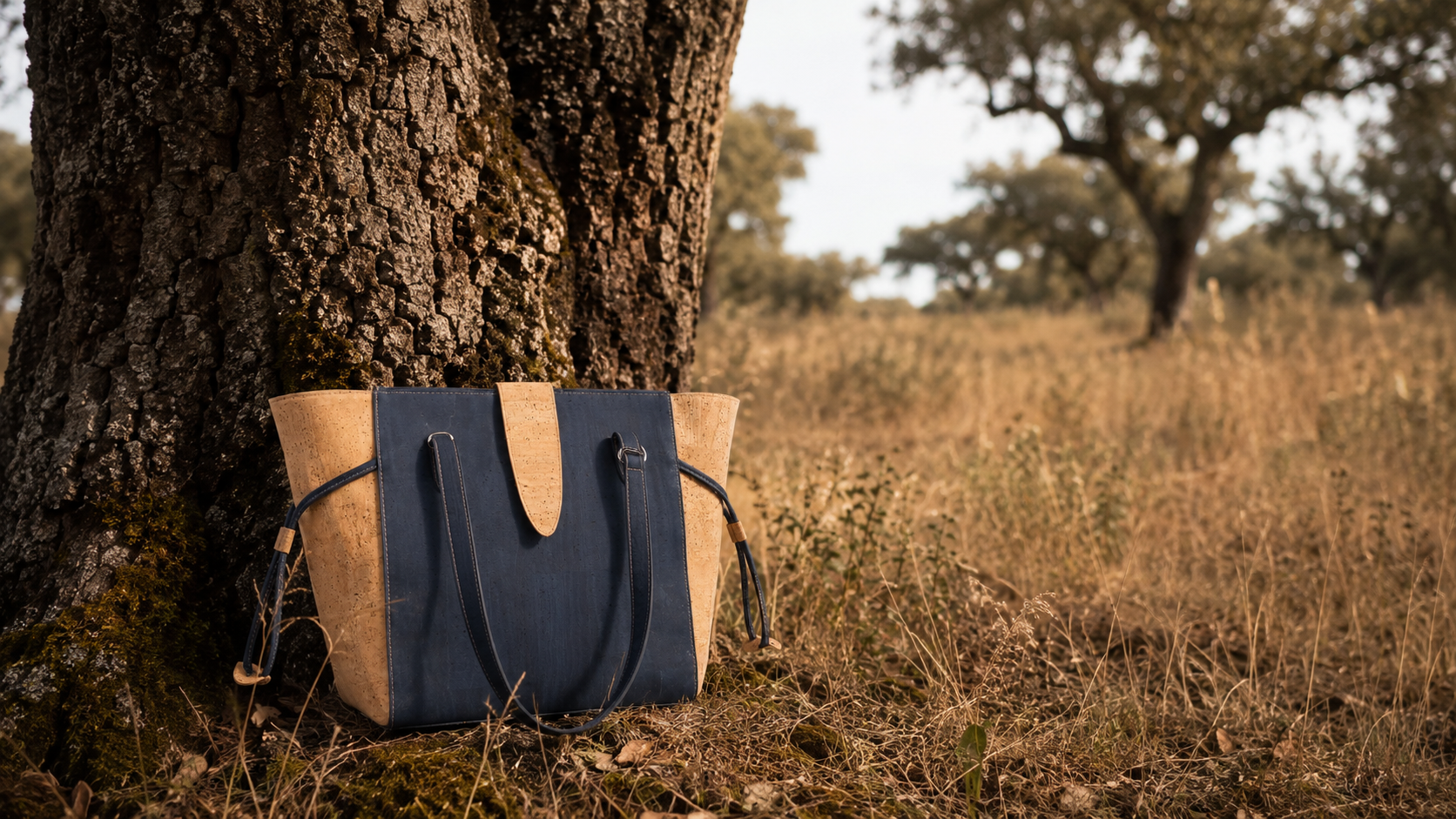
Portuguese cork comes from the bark of the cork oak tree (Quercus suber). Skilled harvesters carefully remove the bark without cutting down the tree, allowing it to regenerate naturally every nine years.
A single cork oak can continue producing cork for more than 150 years.
As a result, cork is one of the world’s few truly renewable materials used in fashion.
Portugal is responsible for more than half of the world’s cork production, while its cork oak forests help preserve biodiversity and capture carbon dioxide.
Did you know?
Portugal’s cork oak landscapes cover more than 730,000 hectares and are among Europe’s most valuable ecosystems.
Learn more: Portuguese Cork Association (APCOR)
Cork vs Leather: 2. Which Material Is Lighter?
Comfort matters, especially if you carry your bag every day.
One of cork’s greatest advantages is its weight.
Its natural honeycomb structure contains millions of microscopic air-filled cells, making cork incredibly light while remaining remarkably durable.
Leather, although equally strong, is noticeably heavier.
For handbags, backpacks and crossbody bags, that difference quickly becomes noticeable during everyday use.
If comfort is one of your priorities, cork offers a clear advantage.
Cork vs Leather: 3. Water Resistance
Unexpected rain or accidental spills happen.
Fortunately, cork naturally contains suberin, a wax-like substance that helps repel moisture.
Unlike many other natural materials, cork doesn’t require additional waterproof treatments for everyday use.
Leather behaves differently.
Although treated leather can resist water, it generally benefits from waterproofing products and regular care to maintain its protective finish.
For daily accessories, cork provides greater peace of mind with much less maintenance.
Cork vs Leather: 4. Maintenance and Care
The easier a product is to maintain, the more likely you’ll continue using it for years.
Fortunately, cork requires very little effort.
Most of the time, a soft cloth and warm water are enough to keep it looking its best.
Leather, on the other hand, usually requires conditioners, protective creams and careful storage to prevent drying or cracking.
Consequently, cork offers a more practical solution for busy lifestyles.
Cork vs Leather: 5. Every Piece Is Unique
Nature never creates identical patterns.
Every sheet of Portuguese cork has its own grain, texture and colour variations.
That means every cork bag or wallet is naturally unique.
Leather also develops character over time through its patina. However, cork offers individuality from the very beginning.
For people who appreciate original products, this natural variation adds even more personality.
Cork vs Leather: 6. A Vegan Alternative
More consumers now consider the environmental and ethical impact of the products they buy.
Since cork comes directly from tree bark, it is naturally plant-based and completely vegan.
Leather, by definition, is made from animal hides.
Choosing cork allows consumers to enjoy a premium natural material while supporting a more plant-based approach to fashion.
Cork vs Leather: 7. Supporting Portugal’s Cork Forests
Perhaps the greatest benefit of cork isn’t the material itself.
It’s the landscape behind it.
Portugal’s cork oak forests support hundreds of animal and plant species while protecting soil quality and helping reduce carbon emissions.
Every cork harvest encourages the trees to regenerate, allowing these forests to remain productive for generations.
By choosing Portuguese cork, consumers also help preserve a centuries-old tradition that combines craftsmanship with responsible forest management.
You can learn more about sustainable forestry through the Forest Stewardship Council (FSC).
Cork vs Leather at a Glance
| Feature | Portuguese Cork | Leather |
|---|---|---|
| Renewable | ✔ | ✘ |
| Vegan | ✔ | ✘ |
| Lightweight | ✔ | ✘ |
| Water Resistant | ✔ | With treatment |
| Easy to Maintain | ✔ | Moderate |
| Durable | ✔ | ✔ |
| Unique Natural Pattern | ✔ | ✔ |
| Supports Biodiversity | ✔ | Limited |
Cork vs Leather: Which One Should You Choose?
Both materials have earned their place in the world of fashion.
Leather continues to appeal to those who appreciate heritage and traditional craftsmanship.
However, cork offers a different perspective.
It is lightweight, renewable, durable and remarkably easy to care for. At the same time, it supports one of Portugal’s most valuable natural resources and reflects a growing commitment to responsible design.
Ultimately, the best choice depends on what matters most to you.
If sustainability, comfort and everyday practicality are high on your list, Portuguese cork is an outstanding alternative.
Final Thoughts
The conversation around cork vs leather is no longer simply about appearance.
Today’s consumers want materials that combine quality with responsibility.
Portuguese cork achieves exactly that.
It brings together centuries of craftsmanship, innovative design and one of the most sustainable harvesting methods in the world.
At Zolla, we believe beautiful accessories should also respect the environment they come from.
Every bag, wallet and accessory in our collection celebrates Portugal’s cork heritage while embracing a more conscious future.
Discover how Portuguese cork can become part of your everyday life.
Frequently Asked Questions
Is cork more sustainable than leather?
Generally, yes. Cork is harvested without cutting down the tree and naturally regenerates, making it one of the world’s most renewable materials.
Does cork last as long as leather?
High-quality cork is highly durable and performs exceptionally well for everyday accessories.
Is cork waterproof?
Cork is naturally water resistant thanks to its high suberin content.
Why is Portuguese cork considered the best?
Portugal combines ideal growing conditions with centuries of expertise, making it the world’s leading producer of premium cork.